What to plant in your first garden bed
There’s a moment every new gardener knows well. You’re standing in front of a freshly dug bed, soil dark and ready, and suddenly your mind goes completely blank. What on earth do I actually put in here?
I’ve been there. Most of us have.
The good news is that your first garden bed doesn’t need to be complicated. In fact, the simpler you keep it, the more likely you are to end up with something you’re genuinely proud of by the end of the season.
Here’s what I’d actually plant, and why.
Start with what you want to eat (or see every day)
Before you rush to the garden centre and buy whatever looks pretty, ask yourself one question: what do I actually want from this garden?
If you want to grow food, start with things you already buy at the shops. Lettuce, cherry tomatoes, courgettes, or a pot of fresh herbs all work brilliantly. There’s something deeply satisfying about eating something you’ve grown yourself, and it keeps you motivated through the inevitable tricky patches.
If you want colour and joy, start with easy annual flowers like cosmos, nasturtiums, or marigolds. They bloom for months and forgive beginner mistakes with remarkable grace.
There’s no wrong answer. The right plants for your first garden bed are the ones that’ll make you want to come outside every morning to check on them.
The most beginner-friendly plants to grow from seed
Growing from seed is cheaper than buying plants, and there’s real magic in watching something tiny push up through the soil. These are the easiest ones to start with.
Radishes
If you’ve never grown anything before, start with radishes. They go from seed to harvest in as little as four weeks, which means you’ll get almost instant feedback that you’re doing something right. Sow them directly into the soil, water regularly, and try not to peek too often.
- Sow: March to August
- Ready to harvest: 4 to 6 weeks
- Why beginners love them: Fast, foolproof, and satisfying to pull out of the ground.
Salad leaves
A small patch of mixed salad leaves will feed you all summer with very little effort. You can start cutting them when they’re just a few inches tall (this is called ‘cut-and-come-again’) and they’ll keep producing for weeks.
- Sow: March to September
- Ready to harvest: 4 to 8 weeks
- Why beginners love them: You can sow a new row every few weeks for a continuous harvest, and they grow even in partial shade.
Nasturtiums
Technically a flower, but one you can eat too. Both the leaves and the bright orange and yellow blooms are peppery and delicious in salads. Nasturtiums are almost impossible to kill, they ramble cheerfully over any bare soil, and they attract beneficial insects that will help the rest of your garden.
- Sow: April to June
- Ready to enjoy: 8 to 12 weeks
- Why beginners love them: Absolutely zero fuss. They actually thrive on being slightly neglected.
Courgettes
One courgette plant will produce more than you know what to do with. They’re fast-growing, dramatic-looking, and give you that proper ‘kitchen garden’ feeling within a single season. Just make sure you check on them regularly. Courgettes left too long become marrows almost overnight.
- Sow indoors: April to May
- Plant outside: After the last frost (usually late May in the UK)
- Why beginners love them: Big, fast results. Very hard to fail with.
Cosmos
If you want cut flowers for the house, grow cosmos. They’re tall, feathery, and come in pinks, whites, and purples. Sow them in pots indoors in spring, then plant them out after the frosts, and they’ll flower right through to the first autumn chill.
- Sow indoors: March to April
- Plant outside: Late May
- Why beginners love them: Prolific, long-flowering, and the more you cut them the more they bloom.
Plants that are easiest to buy as young plants
Some things are genuinely easier to buy as small plants (called ‘plug plants’ or ‘transplants’) rather than growing from seed yourself. There’s no shame in this at all. Even experienced gardeners do it.
Cherry tomatoes
Growing tomatoes from seed is doable, but it requires a warm windowsill and a bit of patience. Buying a small tomato plant in late spring and growing it on is a perfectly sensible shortcut. Cherry varieties like ‘Tumbling Tom’ or ‘Gardener’s Delight’ are especially easy and incredibly productive.
- When to buy: May
- Where to grow: In a large pot, grow bag, or sunny border
- Top tip: Pinch out the side shoots regularly (the little shoots that appear between the main stem and the branches) to direct the plant’s energy into fruit.
Herbs
A small herb tray from the supermarket or garden centre gives you an instant, useful patch. Mint, chives, and parsley are the toughest and most forgiving. Pop them into any sunny spot and water when the soil feels dry.
One warning: Mint spreads aggressively if planted in open ground. It’s much happier, and better behaved, in its own pot.
Marigolds
You’ll see marigolds everywhere in productive gardens, and there’s a good reason for it. They deter aphids and whitefly, attract pollinators, and they’re very nearly indestructible. Tuck them around your vegetables and they’ll quietly protect the whole bed.
What to avoid in your first year
Just as important as knowing what to plant is knowing what to leave for later.
Avoid parsnips and carrots in your first year if your soil is heavy clay. They need deep, loose, stone-free soil to develop properly, and a compacted bed will give you twisted, forked results that are more funny than useful.
Avoid brassicas (cabbages, broccoli, kale) unless you’re prepared to net them against cabbage white butterflies and pigeons. They’re worth growing, but they need a bit more protection than most beginners expect.
Avoid planting too much at once. It’s tempting to fill every inch of your new bed, but overcrowded plants struggle to grow well and are more vulnerable to disease. Leave more space than you think you need.
A simple planting plan for a 2m x 1m bed
If you want a ready-made idea, here’s a simple layout that works well for a first season:
- One end: Two courgette plants (give them plenty of room, they sprawl)
- Middle: Three rows of mixed salad leaves, re-sown every few weeks
- Other end: A row of radishes tucked in wherever there’s a gap
- Edges: Nasturtiums allowed to tumble out over the sides
That’s it. That’ll give you food to eat and something beautiful to look at from May through to October.
A final honest word
Your first garden bed will not be perfect. Some things won’t germinate. Some things will get eaten by slugs. Some things will bolt (go to seed) before you get a chance to harvest them.
This is normal. This is gardening.
What matters most in your first season isn’t a perfect harvest. It’s building confidence and getting a feel for how plants behave. Every mistake teaches you something useful for next year.
So keep it simple, choose things you’re genuinely excited about, and try not to put too much pressure on yourself. Your garden is allowed to be a bit of a muddle. Most of the best ones are.
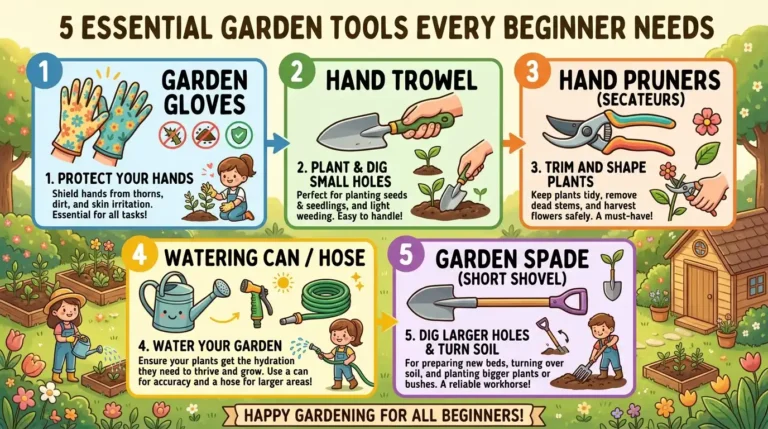
Ready for the next step? Take a look at The 5 Garden Tools Every Beginner Actually Needs, because the right tools make everything just a little bit easier.